The terms, as published
Registration opened the same day the cabinet approved the programme and runs to 31 January 2027. The figures below are the ones that decide whether a job is bankable.
| Item | Term |
|---|---|
| Subsidy | THB 50,000 per household, applied against equipment and installation — not paid as cash |
| Target | 1,000,000 households, total framework THB 50 billion |
| System size | 5–10 kWp per electricity meter; new installation or an expansion of that size |
| Registration | 27 Oct 2026 – 31 Jan 2027, via PEA or MEA, first come first served |
| Grid application | By 31 Aug 2027 |
| Grid connection complete | By 30 Sep 2027 |
| Export | THB 2.20/kWh, export capacity capped at 5 kW per meter |
| Financing | GSB, GHB and BAAC; 2.5% per year, up to 7 years |
| Indicative package | THB 140,000 for a 5 kW single-phase system — THB 90,000 net after subsidy |
| Not combinable with | The Royal Decree No. 805 rooftop tax deduction (up to THB 200,000) |
A million households, 5 to 10 kWp each, inside roughly twelve months of build time. Demand is not the constraint. The constraint is how many registered installers can finish a roof before 30 September 2027 — and whether the clamps, hooks, rail and earthing arrive before the crew does.
Four dates, not one
Most coverage quotes the registration deadline because it is the one a homeowner can act on. If you actually build these systems, the binding dates are the last two:
- 31 Jan 2027 — registration closes. This sets the size of the demand pool.
- 31 Aug 2027 — the grid-connection application must be submitted. A job that misses this is dead regardless of how good the roof is.
- 30 Sep 2027 — the system must be connected and energised. Not installed. Connected.
In practice the build window is February to September 2027, and almost everyone will try to build in the last quarter of it. Which means the material you order in July will be competing with everyone else's July order, and sea freight does not care about a government deadline.
Production plus sea freight from Hebei to a Thai port is measured in weeks, not days. A container booked in August lands after the connection deadline. If you are planning volume for this programme, the parts decision has to be made while registration is still open — not after the rush starts.
The bank guarantee is the real filter
Under the vendor handbook, a participating installer has to provide a THB 50,000 bank guarantee per installation, valid six months, plus a further THB 10,000 guarantee after grid connection covering a seven-year defect liability. On top of that sit a seven-year installation warranty, fire insurance, and panel inspection and cleaning at least once a year.
Do the arithmetic on one job: a THB 140,000 contract with THB 50,000 tied up in a guarantee is 36% of the contract value locked for half a year. An installer running a hundred houses needs working capital it may not have. This is why some Thai installers have publicly said they will not participate, and why the government has been arranging guarantee facilities at under 1% a year.
The practical consequence for anyone selling into this market: your customer is now a company with a cash-flow problem, not a demand problem. That changes what they value. They do not want a cheaper clamp that arrives in eleven weeks. They want the clamp that is on a shelf today, in a quantity below a container, with no deposit large enough to break their guarantee headroom.
What one 5–10 kWp house actually consumes
The programme allows rooftop, ground-mounted and floating systems, but the volume will be pitched residential roofs — tile or metal sheet, not flat concrete. So the bill of materials for a typical house leans on hardware rather than ballast: hooks or L-feet, rail, clamps, splices, earthing, connectors. Six lines, none of them expensive, all of them capable of stopping a crew for a week.
| Line | What decides the spec |
|---|---|
| Roof hooks / L-feet + rail | Tile type and purlin spacing, not panel count |
| Mid and end clamps | Module frame thickness; mid spans a joint, end closes the array |
| Rail splices and channel nuts | Rail section and the number of joints per run |
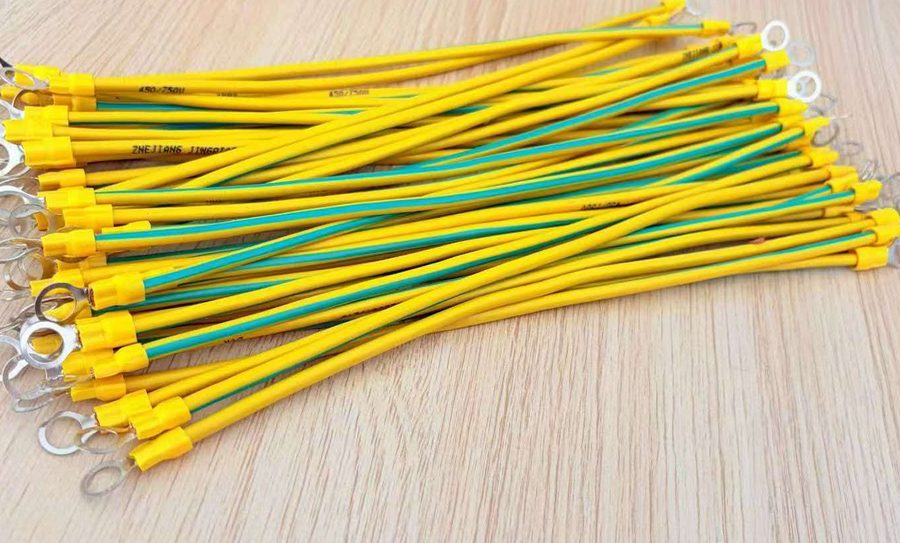
| Earthing jumpers | One bond per module-to-module joint, plus a continuous earth run |
| MC4 connectors and DC cable | String layout and the roof's cable route |
| Fire cover, clips, conduit | Local practice and the inspector's checklist |
We deliberately give no quantities in that table. They follow the layout, and a quantity guessed at by a supplier is a quantity the installer has to re-order at retail prices. Send the roof and the module and we will count the parts.
The 5 kW export cap is an engineering constraint
The programme allows a 10 kWp array but caps what a meter may export at 5 kW. At THB 2.20/kWh, the return comes from self-consumption first, so the two numbers that decide the household's economics are how much it uses during daylight and how the inverter is set.
Where the array is larger than the export cap, the inverter has to limit export — either by sizing the inverter at the cap and oversizing the array against it, or by enabling an export-limitation setting. Get this wrong and the household either breaches the connection conditions or gives power away. Confirm the setting with PEA or MEA before you quote, not after you commission.
What we supply, and what we do not
We are a supplier in Hebei, China. We are not a Thai entity, not a registered installer, and not an adviser on eligibility.
- We supply: hot-dip galvanised racking, Zn-Al-Mg rail at 30 × 4.0 mm, mid and end clamps, one-piece clamps, corner brackets and flat bar, M-gutter and carriers, 304 stainless fittings, yellow-green grounding jumpers, extended earth leads, copper lugs, MC4 connectors and fire covers in 1000 V and 1500 V, branch connectors and DC cable, inverter covers, rain hoods, canopies, cable tray, tool kits — and water ballast mounting for flat concrete roofs, where that is the right system.
- We do not: install, register an application, certify a roof, or tell a homeowner whether they qualify. Installation must be carried out by PEA, MEA or an installer registered with them. Any subsidy advice should come from the authority handling the application, not from a parts supplier.
Before you quote a house
- Meter name must match the applicant. A mismatch has to be corrected at the authority before registration, and that takes time.
- One subsidy per person, and existing systems are excluded — this is a new install or a qualifying expansion of 5–10 kWp.
- Invoices must be dated from 27 October 2026 onward. Equipment bought earlier does not count.
- Condominium units are excluded from the residential category, and the subsidy is for Thai nationals applying as individuals.
- Welfare card holders can participate but must waive the electricity subsidy on the connected meter for 20 years. Say so before they sign, not after.
- The RD 805 tax deduction and this subsidy cannot both be claimed, in whole or in part.
Quick answers
THB 50,000 per household, applied against the equipment and installation invoice. It is not paid to the homeowner as cash.
5 to 10 kWp per electricity meter, either a new installation or an expansion of that size on top of an existing system. It must include at least modules and an inverter, and it must be installed by PEA, MEA or a contractor registered with them.
Register by 31 January 2027. Submit the grid-connection application by 31 August 2027. Be connected by 30 September 2027. Registration is first come, first served against the one million places.
No. The programme excludes the Royal Decree No. 805 deduction of up to THB 200,000, in whole or in part.
THB 2.20 per kWh, with export capacity capped at 5 kW per meter. MEA guidance describes a 20-year arrangement, while some coverage has reported 10 years — confirm the term with the authority at registration rather than relying on press summaries.
MEA service area (Bangkok, Nonthaburi, Samut Prakan): peoplesolar.mea.or.th. PEA service area (the rest of the country): peoplesolar.pea.co.th. Identity is verified through the ThaiID app or ID card details.
Sources
- Thairath English — programme terms, registration channel and preparation checklist: registration guide
- Thai FYI — vendor handbook conditions, guarantee amounts and installer withdrawals: programme report
- The Paper — budget, connection deadlines and installer guarantee concerns: report
- SMM — first-phase budget status and registration window: market note
Programme rules are set by the Thai authorities and can change. This page records the position as reported on 9 November 2026 and is not a substitute for the official handbook.
Get the parts list, not the brochure
Send us the roof type, the module size and roughly how many houses you are planning for the 2027 window. We will come back with a component list per house, stock status against each line, and a container loading plan — so you know what is on the shelf before you commit to a guarantee.
Stocking for the 2027 window?
Tell us the roof and the volume. We reply with a per-house component list and what we can ship now.
Send project details See the full rangeRelated: ballast calculation guide · full product range · installed projects · all technical guides